Everything You Didn’t Know You Needed Before Your First Product Ships
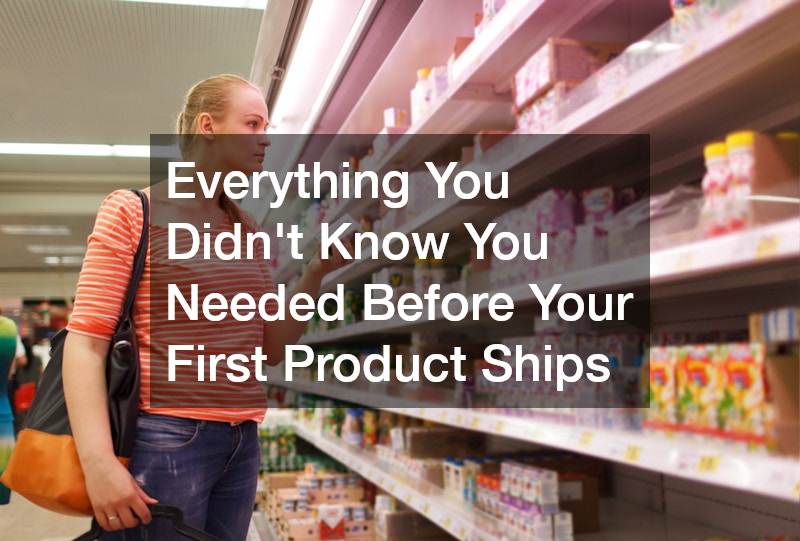
The transition from a prototype to a shippable product is the most treacherous valley in the startup journey. Many founders spend years obsessing over software code, ergonomic curves, or the chemical composition of a new consumer good. However, the reality is that building the product is only half the battle. The second half—the logistics, the infrastructure, and the physical movement of atoms—is often where the most promising ventures bleed cash and credibility. This guide explores the hidden operational requirements that founders often overlook until the final hour.
The Reality Check Most Founders Skip Before Launch

The romanticized narrative of the startup world often ends at the moment the product is “finished.” In reality, that is merely the beginning of the operational phase. Why building the product is only half the battle becomes clear the moment you receive your first hundred orders. A product exists in a vacuum; a business exists in a complex ecosystem of vendors, carriers, and physical constraints.
The operational blind spots that delay first shipments are rarely about the product itself. Instead, they are about the mundane: the size of a door, the weight of a crate, or the lead time on a specific adhesive. Early-stage assumptions, such as “we will just ship from the garage” or “the manufacturer will handle the packing,” create last-minute chaos. When orders start flowing, the lack of a structured backend turns a dream launch into a nightmare of customer service tickets and refunded late orders. You must audit your physical workflow with the same rigor you apply to your product’s user interface.
Packaging Is a System, Not an Afterthought
Many founders treat packaging as a trip to the local office supply store, but at scale, packaging is a high-stakes engineering challenge. If you are shipping thousands of units, the manual folding of boxes becomes a bottleneck that no amount of caffeine can overcome. This is where automated box-making machines can save time and money at scale. These systems allow you to create custom-sized corrugated housing on demand, reducing the need for excessive filler material and lowering dimensional weight shipping costs. By right-sizing your boxes instantly, you minimize the “shipping air” problem that eats into margins.
Matching your packaging format to your fulfillment workflow is essential. If your box is difficult to tape or requires complex inserts, your “cost per ship” will skyrocket due to labor hours. You must decide early when to invest in custom packaging versus off-the-shelf solutions. While custom boxes build brand equity, off-the-shelf solutions offer speed. A hybrid approach often works best for the first ship: standard outer protection with high-quality internal branding. Remember, the packaging must survive the “drop test” from a delivery truck just as much as it must look good on an Instagram story.
Your Brand Has to Work in the Physical World Too
A beautiful website does not guarantee a beautiful unboxing experience. The digital-to-physical gap is a common pitfall. To bridge this, using professional graphic design services to create print-ready assets is a non-negotiable step. Digital RGB colors look different than physical CMYK inks, and a logo that looks crisp on a Retina display might pixelate on a cardboard box if not formatted correctly. Designers who specialize in physical media understand bleed lines, ink saturation on porous surfaces, and structural integrity.
How business printing quality affects customer perception at unboxing cannot be overstated. A grainy instruction manual or a smudged shipping label signals a lack of professionalism. Aligning your digital brand identity with physical packaging and inserts ensures that the promise you made in your marketing is kept when the customer finally holds the product in their hands. This includes the tactile feel of the paper, the clarity of the font, and the ease of opening. Consistency across these touchpoints builds the trust necessary for repeat business and word-of-mouth referrals.
You Can’t Ship What You Can’t Store
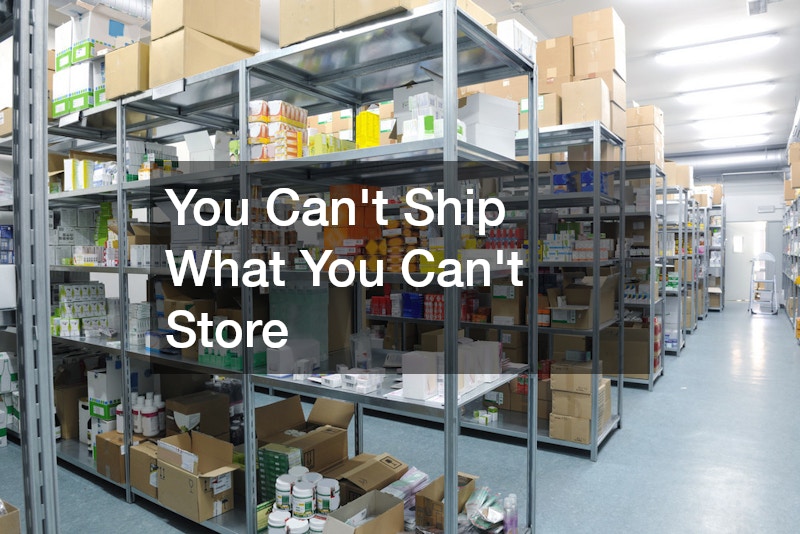
Inventory management is frequently the most underestimated physical hurdle. Even if you are a “lean” startup, you need a place for your goods to land. Choosing the right warehouse rack configuration for your inventory size determines how quickly your team can pick and pack. If you simply stack boxes on the floor, the “First In, First Out” (FIFO) principle becomes impossible to manage, leading to expired or obsolete stock buried at the bottom of a pile. High-density racking can double your storage capacity without increasing your footprint.
How poor storage planning leads to damaged goods and fulfillment delays is a lesson most founders learn the hard way. Crushed boxes at the bottom of a stack represent pure lost margin. Evaluating your first warehouse space before signing a lease involves checking more than just square footage. You must look at ceiling height (vertical cube), floor load capacity, and the turning radius for forklifts or pallet jacks. If your racks don’t fit the space efficiently, you are paying for air you cannot use. Furthermore, consider the climate: a humid warehouse can warp cardboard packaging before it even leaves the building.
Moving Product Inside Your Operation Is Its Own Challenge
Once you have thousands of units, you can no longer rely on manual labor to move them from the loading dock to the shelf and eventually to the packing station. The role of bulk material handling equipment in a growing fulfillment setup is to preserve the health of your workers and the integrity of your speed. Whether it is conveyor systems, industrial hoppers, or specialized carts, these tools are the circulatory system of your warehouse.
When manual processes stop making sense and equipment becomes necessary is usually the moment your daily volume exceeds what two people can move in an hour. To avoid over-investing, you must learn how to assess volume thresholds before committing to material handling solutions. Buying a high-end automated sorting system for ten orders a day is a waste of capital; failing to buy a simple gravity conveyor for fifty heavy boxes a day is a recipe for a workers’ compensation claim. Start with modular equipment that can grow as your SKU count increases.
The Equipment Underneath Your Operation That No One Talks About
Behind the scenes of every heavy-duty fulfillment center or manufacturing floor is a world of mechanical force. How hydraulic power systems support lifting, pressing, and moving at scale is a fundamental part of modern shipping. From the dock levelers that bridge the gap between the warehouse floor and the truck bed to the compactors that handle your mounting waste, hydraulics provide the invisible muscle required to handle industrial-scale weights safely.
Founders must spend time evaluating whether to lease or purchase heavy operational equipment. For a first ship, leasing often provides the flexibility to upgrade as you grow and ensures you aren’t stuck with obsolete tech. However, matching power and equipment specs to your actual facility and workflow needs is critical. If you buy a machine that requires a three-phase power outlet and your warehouse only has standard 110V, your production will grind to a halt. Always consult with a facilities engineer to ensure your infrastructure can handle the “draw” of your new machinery.
Getting Your Product From Your Facility to a Truck Is Harder Than It Looks
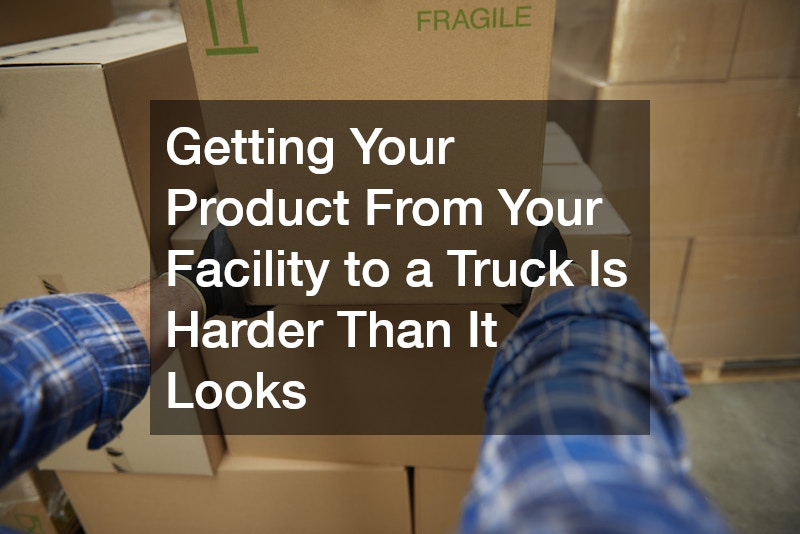
The final fifty feet from your warehouse door to the back of a freight truck are where many logistics plans fail. Why working with a reliable pallet supplier matters more than most founders realize becomes clear during the first LTL (Less Than Truckload) shipment. A broken or substandard pallet can lead to a rejected shipment at a major distribution center, or worse, a collapsed load that destroys your entire inventory in transit.
Understanding pallet standards, sizing, and compliance requirements for retail and third-party logistics (3PL) is mandatory. For instance, the standard 48×40 GMA pallet is the baseline in the US, but if you are shipping to Europe, you need Euro-pallets. If you are shipping internationally, you may require heat-treated pallets to prevent pest migration. How pallet strategy connects to freight cost and carrier relationships is the difference between a profitable shipment and one that costs you money. Efficiently stacked and wrapped pallets maximize truck space, which lowers your carbon footprint and your per-unit shipping bill.
Temperature and Specialty Logistics Can Make or Break Certain Products
Not every product can sit in a dry warehouse. When a cooler trailer becomes a non-negotiable part of your shipping plan, your complexity increases tenfold. This isn’t just for food or beverages; cosmetics, high-end adhesives, and certain sensitive electronics have strict temperature thresholds. If your product melts, separates, or loses its chemical stability at high temperatures, a standard delivery truck sitting in the sun will destroy your brand reputation before the customer even opens the box.
Industries and product types that require temperature-controlled last-mile delivery must plan for “cold chain” integrity. This involves everything from validated insulated packaging to real-time temperature monitoring sensors. How to find and vet specialty logistics partners before your launch date should be a priority. You need a partner who understands that a two-hour delay in the sun is a catastrophic failure, not a minor inconvenience. Ask for their contingency plans: what happens if the refrigeration unit on the trailer fails?
Outsourcing the Right Way Protects You When Things Go Wrong
As a startup, you cannot do everything yourself. However, understanding outsourcing and risk management before you hand off critical functions is what separates successful founders from those who lose control of their destiny. If you outsource your manufacturing or your fulfillment to a third party, you are only as strong as your vendor’s backup plan. You are essentially renting their competence.
How to structure vendor contracts to protect your startup from supply chain disruption involves more than just price negotiation. You need clear Service Level Agreements (SLAs) regarding lead times, peak-season capacity, and defect rates. Building redundancy into your vendor relationships from day one—such as having a secondary source for your most critical components or a secondary 3PL in a different geographic region—ensures that if one factory closes or one port is blocked, your business survives. Risk management is about imagining the worst-case scenario and having a pre-signed contract ready to mitigate it.
The Tools Behind the Product Nobody Sees but Everybody Feels
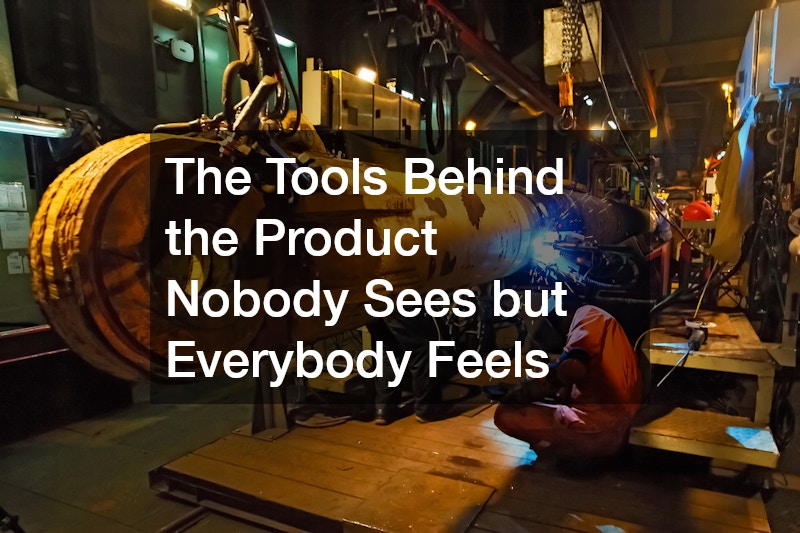
Finally, we must look at the production line itself. Whether you are assembling in-house or using a contract manufacturer, how the right manufacturing tools affect product consistency and defect rates is the difference between a “luxury” feel and a “cheap” knockoff. Precision matters. Even small tools—calipers, torque wrenches, or specialized jigs—ensure that the thousandth unit is identical to the first.
Auditing your production process before scaling volume is a vital quality control step. You should know what to look for when evaluating a manufacturer’s equipment and quality control standards. Are they using modern, calibrated machinery? Do they have a preventive maintenance schedule for their presses and assembly robots? If the manufacturing tools are outdated or poorly maintained, the variance in your product will be too high. This leads to a high return rate, which is the fastest way to drain your cash reserves and kill a startup in its first year.
Shipping your first product is a monumental achievement, a rite of passage that few entrepreneurs actually complete. However, the “shipping” part of the business is a physical discipline that requires as much attention as your marketing or product design. By looking past the surface and into the world of box-making machines, warehouse racks, and bulk material handling equipment, you build a foundation that can actually support the weight of your success.
Operational excellence is not as flashy as a viral marketing campaign or a sleek UI, but it is the invisible force that ensures your customers actually get what they paid for. The founders who succeed are those who realize that their “product” is not just the item in the box, but the entire system that delivers that item safely, consistently, and profitably to the customer’s door. Plan for the physical reality of your business today, so you can focus on growing its legacy tomorrow.